













Learn how Îçҹ̽»¨Íø delivers complex construction solutions across markets by visiting ourÌýÎçҹ̽»¨Íø Page.
About the Project
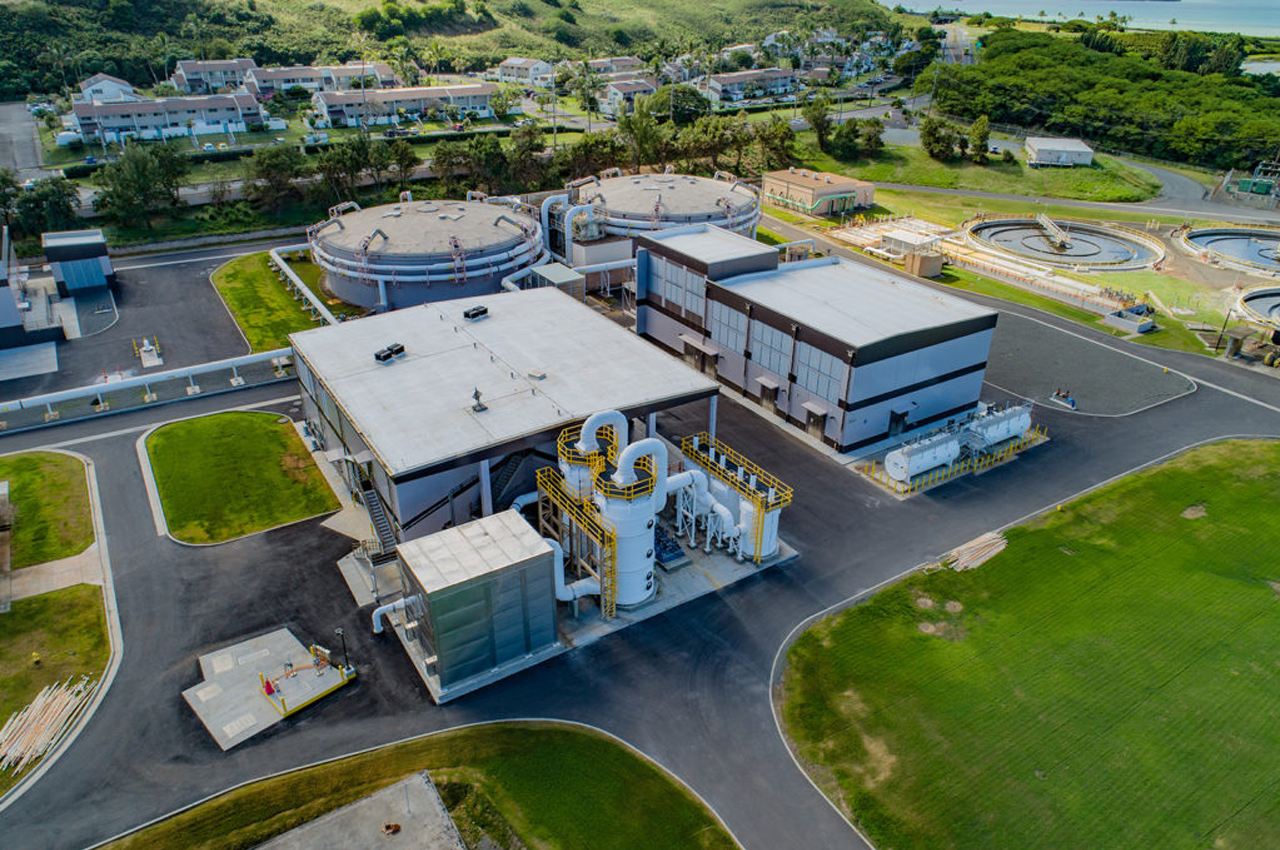
The Base Administrative Building is located at Marine Corps Base Camp Blaz (MCBCB) in Finegayan, Guam and supports the administrative functions at the base. The facility is a three-story, 65,304-square-foot administrative building, which includes a single-story legal annex and a separate 6,178-square-foot U.S. Post Office. The administrative building was built for Category Risk IV, and the legal annex and post office were built for Category Risk II.  
“Îçҹ̽»¨Íø […] has ‘best in class’ project management capabilities. The quality of their preparation is evident with intricate phasing plans and detailed schedules, but they are also flexible and adapt to changing conditions immediately, efficiently allocating resources to minimize delay without compromising quality.”
JACK KIM, KORANDO CORPORATION GENERAL MANAGER
Challenge

Limited Resources
During the construction of the Base Administrative Building, Guam experienced a significant surge in construction activity, which placed considerable strain on the island’s limited resources. This increased demand overwhelmed the capacity of local ready-mix concrete plants. Due to Guam’s susceptibility to storms and consistently humid climate, concrete is the primary material used in nearly all structural construction. Consequently, the restricted availability of concrete directly and critically impacted the project timeline. Ìý
To meet the project schedule, the team required a minimum of two concrete placements per week. However, at the outset, Îçҹ̽»¨Íø could only secure one placement per week due to the high demand across the island. This limitation, compounded by frequent rainstorms that impacted the few available placements, posed substantial risks to the project’s timely completion. Ìý
Solution
Purchasing a Concrete Pump
Following the initial scheduling difficulties, the project team met with a local concrete supplier to explore alternative strategies that would increase concrete placement availability. During these discussions, they clarified that the primary constraint was not the supply of concrete or the availability of delivery trucks, but rather the limited availability of functional concrete pumps. Although concrete could be supplied, frequent breakdowns of the supplier’s pumps hindered their ability to meet the volume of placement requests.  Unlike other regions where third-party companies provide concrete pumping services, in Guam, this function is typically handled by the batch plants themselves. Ìý
Additionally, the concrete supplier expressed concern over the recurring issue of last-minute order cancellations by contractors, which significantly disrupted their operations. They indicated that if Îçҹ̽»¨Íø could provide its own concrete pumping capabilities and maintain a consistent placement schedule, the supplier would be able to support multiple placements per week with their supply. Ìý
In response, Îçҹ̽»¨Íø quickly procured its first concrete pump for Guam, which was shipped within a few weeks.  Although this operation was a new self-perform scope in Guam for Îçҹ̽»¨Íø, its value to the project motivated the team to undertake the risk. Leveraging materials from the American Concrete Pumping Association (ACPA), the project team initiated a training program to prepare a crew of equipment operators to safely and effectively operate the new pump.  This included flying in operators from Hawaii to oversee the initial placements and ensure the team had the knowledge to overcome the pumping challenges.   

Result

Accelerated Schedule and Self-Perform Concrete Placing
The acquisition of the concrete pump immediately increased placement frequency, accelerating the structural schedule. Over the course of the project, Îçҹ̽»¨Íø completed more than 170 placements and pumped over 5,000 cubic yards of concrete—successfully maintaining the project timeline. Ìý
The pump’s success extended beyond the Base Administrative Building project. It benefited other Îçҹ̽»¨Íø projects by enabling greater scheduling flexibility and securing more substantial commitments from ready-mix suppliers. Compared to third-party rentals, the cost savings from self-performing pumping operations were also significant. Ìý
Building on the success in Guam, Îçҹ̽»¨Íø procured two additional pumps to support operations on Oahu. While this new capability introduced operational risks, the team embraced the challenge—transforming it into a strategic advantage and opening new opportunities across the Pacific Region.Ìý


Related Îçҹ̽»¨Íø
-

-

-

-

-

Federal + Defense project
Defense Threat Reduction Agency (DTRA) Albuquerque Administrative Office Building Learn More -